Ulises Mendoza
Mechanical engineering student at the University of Illinois Chicago. Frame lead on our Formula SAE team. I design things that get built.
About
I'm a mechanical engineering major with a finance minor, graduating in 2029. I lead the frame sub-team on UIC's combustion Formula SAE car, where I direct five people across frame, aerodynamics, and body, and own our Structural Equivalency Spreadsheet — the submission that proves our chassis meets FSAE structural rules.
Outside school I help run Mendoza Landscaping, my family's company. We've grown from two people to six and from twenty clients to over a hundred. Running crews, quoting jobs, and controlling costs taught me most of what I know about how things actually get done.
Projects
Hybrid Steel-Oak Under-Desk Storage Enclosure
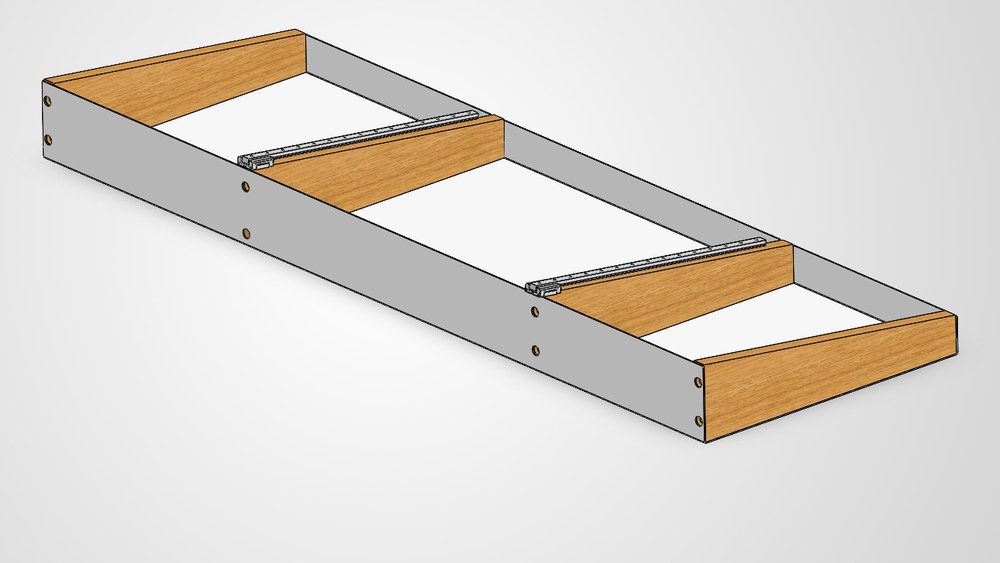
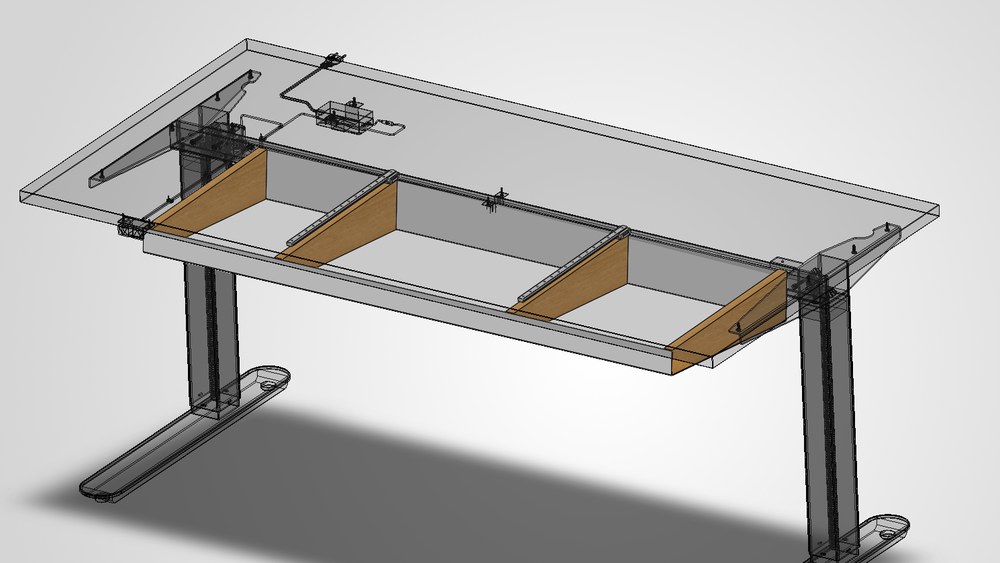
A standing-desk-mounted storage system built to replace a freestanding drawer unit without the visual clutter. The design constraint that drove everything: no hardware visible from the side profile.
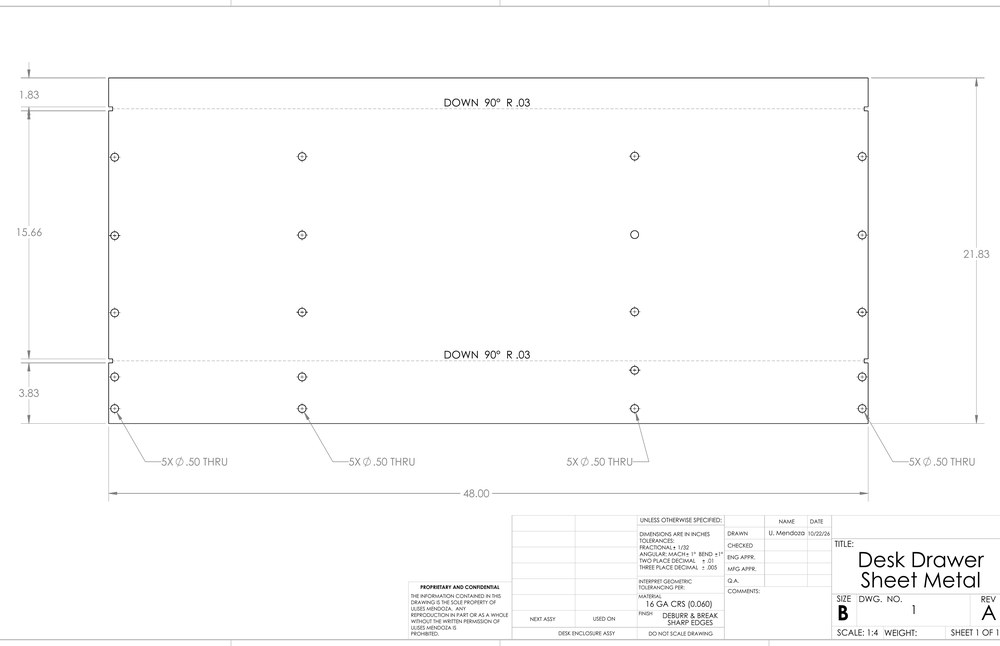
I solved it with two top-mounted linear guide rails, which meant holding tolerances tight enough for zero-binding travel across a 14-inch extension. The body is a single bent 16-gauge steel part rather than a welded assembly — fewer operations, no weld distortion, no assembly tolerance stack. Four solid oak panels join to it with threaded blind inserts.
I managed fabrication through an outside shop, generating DXF and STEP files for CNC laser cutting and press braking.
- SolidWorks sheet metal
- 16-gauge cold-rolled steel
- Single bent part + 4 oak panels
- 14-inch drawer extension
- DFM: bend allowance, K-factor
- DXF / STEP to CNC
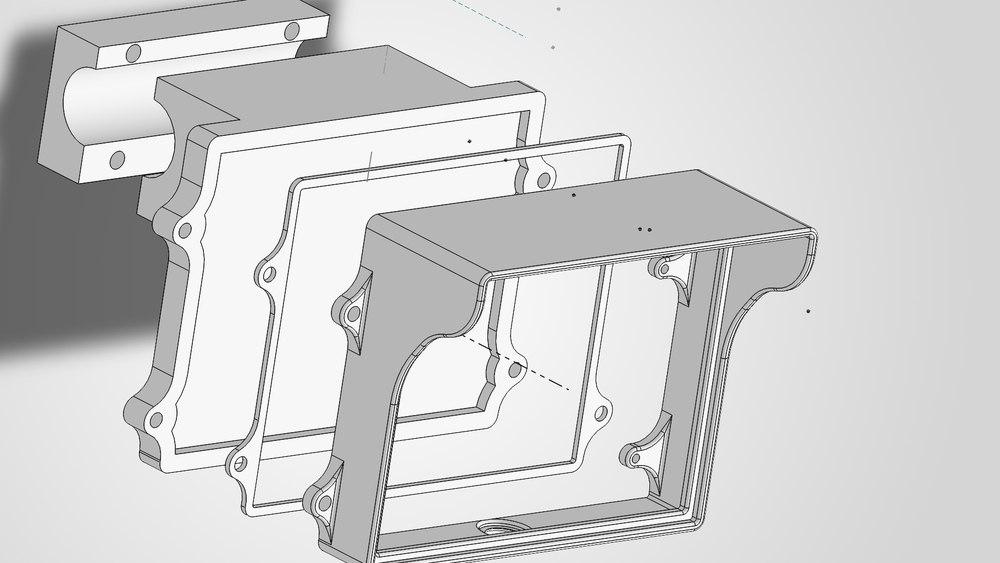
Formula SAE — Frame, Aerodynamics & Body
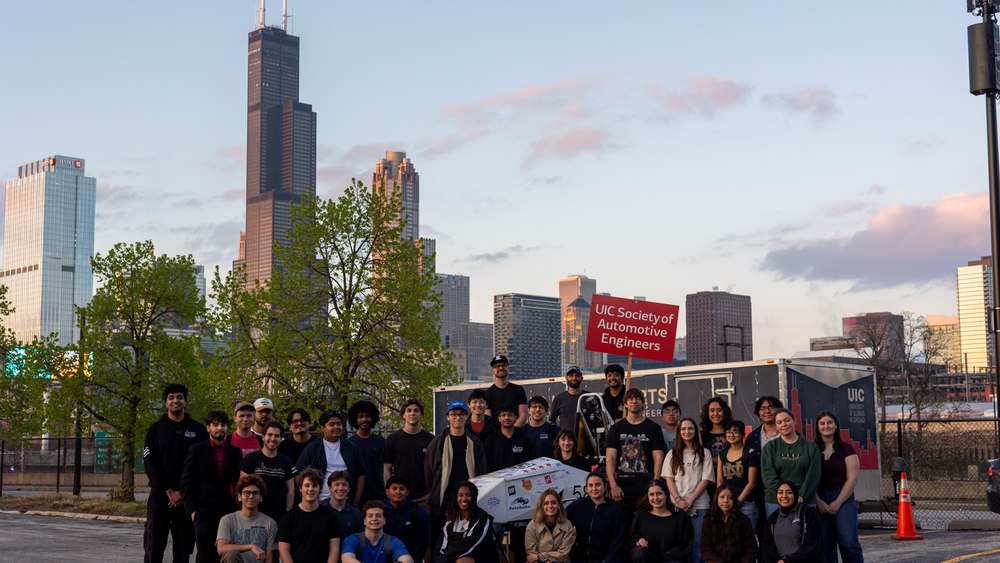
I direct a five-person sub-team responsible for the frame, aero, and body of UIC's combustion Formula car — a steel tube space frame. I took over the role from the previous frame lead this fall.
My main deliverable is the Structural Equivalency Spreadsheet, the formal submission documenting the calculations that prove our frame design meets FSAE structural requirements. It covers every member in the frame, and it's a hard deadline with a pass-or-you-don't-run outcome. I also maintain and revise our inherited 30-part frame and jig model in SolidWorks — the driver dash housing is mine — and cross-reference the chassis model against the published rules.
- Structural Equivalency Spreadsheet
- Steel tube space frame
- 30-part frame & jig assembly
- Driver dash housing
- 5-person sub-team
- FSAE rules compliance
Kinetic Spring-Powered Sled
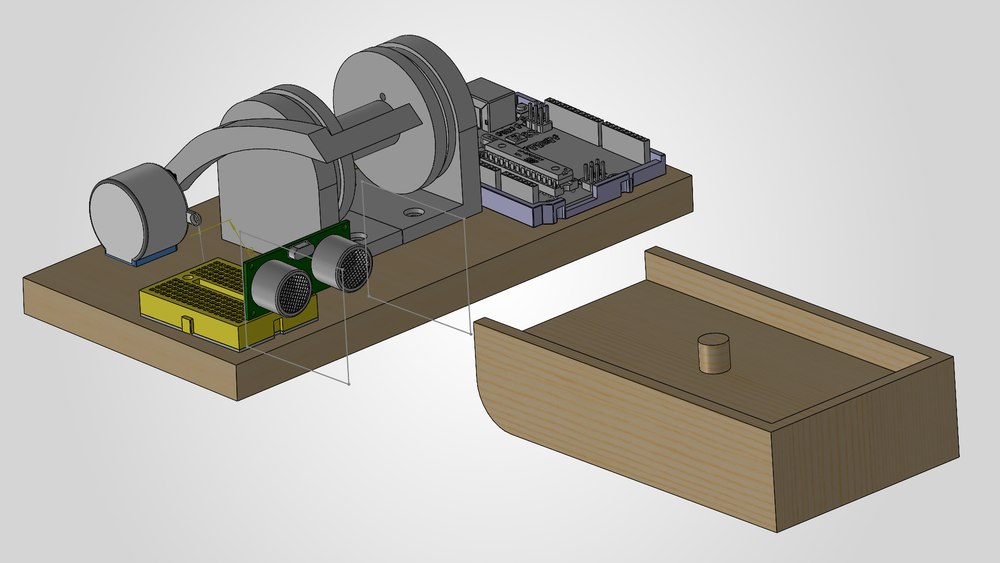
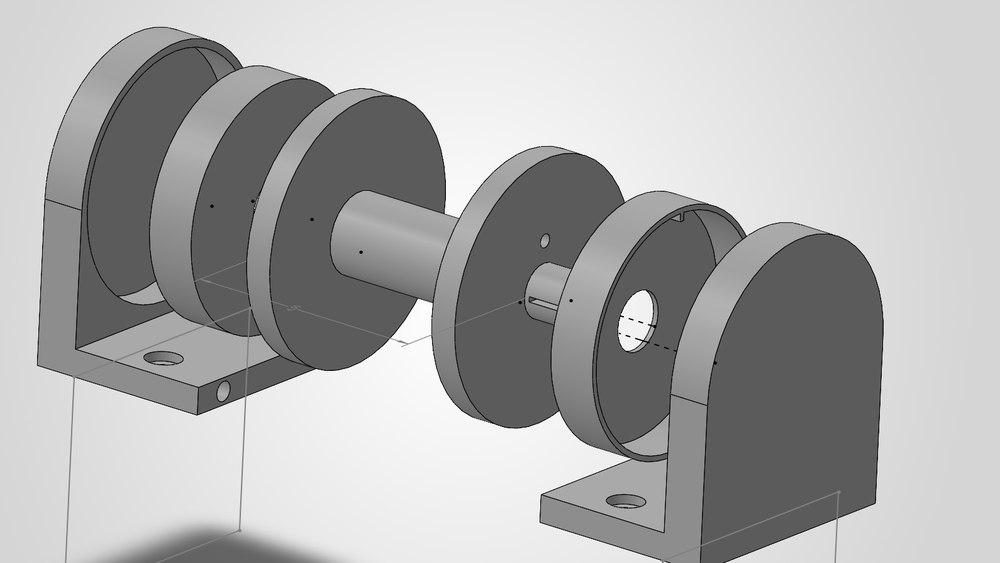
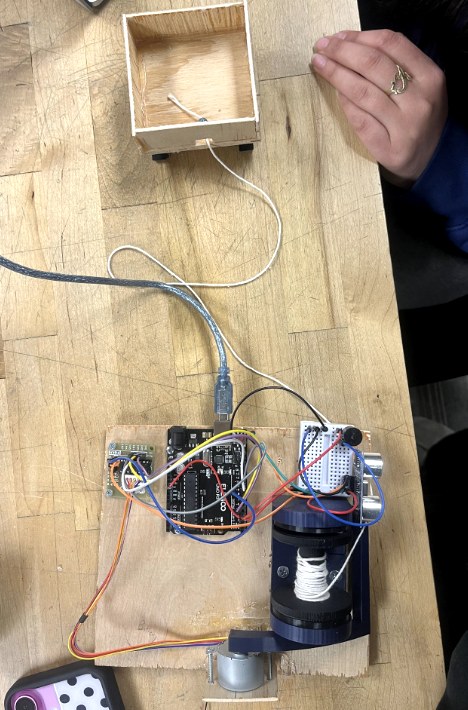
A spring-powered sled built under strict material and sustainability constraints. We ran it 30 feet against a 40-foot target, using linear torsion springs repurposed from a three-foot measuring tape — near-zero material cost.
The more useful outcome was the failure. The tape spring sits inside the drum housing, and the mounting that held it there relied on friction rather than mechanical fastening — under load it pulled free and the housing came apart. Bolting that mount is the fix on the next revision. It's the clearest lesson I've had in the difference between a design that works on paper and one that survives testing.
- Spring constant calculations
- Stored energy analysis
- 10-part assembly
- 30 ft travel achieved
- Failure mode analysis
Experience
Mendoza Landscaping — General Manager
I helped launch the company and have grown it from two staff to six across three crews, and from twenty recurring clients to over a hundred. I lead daily operations — scheduling, staffing, route optimization — and own the full job pipeline: site estimates, contract negotiation, landscape designs, material takeoffs, budgeting, and cost control. We produce 100+ estimates a season and keep roughly 99% of clients year over year.
Education
University of Illinois Chicago
Coursework: Engineering Design & Graphics (CAD), Programming for Engineers (MATLAB), Applied Linear Algebra, Financial Engineering, Introduction to Finance.
Skills
Software
- SolidWorks
- Solid Edge
- Ansys
- MATLAB
- Microsoft Excel
Engineering methods
- Design for Manufacturing
- Sheet metal design
- Tolerance analysis
- Material selection
- DXF / STEP for CNC
Fabrication
- TIG welding
- 3D printing
- Soldering, Arduino
- Calipers, micrometers
- Table saw, band saw, drill press
Languages
- Spanish — fluent
Contact
I'm looking for a summer 2027 mechanical engineering internship — ideally something hands-on, close to manufacturing or hardware.